Friday, August 13, 2010

Teenage Dreams: All Grown Up But Still Nostalgic One Pop Song at a Time

Let me just begin with this, I cannot stop thinking about Katy Perry’s new song “Teenage Dream” – the title track from her forthcoming album which has already given us the world’s most superfluous Snoop Dogg collabo with unnecessary misspelling in “California Gurls” (also, the most recent entry in the long list of pop music earworms you wish you’d never heard). The "Teenage Dream" video is quite boring – lots of beaches and driving in bikini tops and a hot boy and overlong shots of undoing Katy’s jeans and some writhing in a motel room, all filmed in the kind of undersaturated fashion that evokes 1970’s cinema but ultimately seems merely nostalgic for reruns of The OC (helped, of course, by the presence of a former cast member as Katy’s creepy lurkey man crush in the vid). This is presumable the yin to the neon colored yang that was the Candyland themed vid for “California Gurls.” Or perhaps Katy shot her wad (literally if you count her breasts ejaculating with frosting at the video’s close) on being the cartoon character Katy that she plays 24/7 – you know, the one that we’re supposed to believe is hilarious, endearing and Bette Page with gay BFFs. Oh, and did I mention she can’t perform live? At all. Ever. Shouldn’t be allowed.

But back to “Teenage Dream” – aurally the song is nostalgic as well, filled with the language of virginity as a prize, “the first time,” and true love being a boy who likes you without your makeup on (which is funny since Katy cakes that shizz on). Any good postmodernist or feminist worth their snuff knows that nostalgia is so much crap, so much yearning for a capitol-P Past that never really was, or if it did exist was really only in circulation for those with privilege and power. There’s a far distance between theory and life, between words I read and believe and the affective experience of life. We all yearn for earlier, before, younger; I felt it riding into my hometown on a train just yesterday and that feeling shouldn’t be discounted. And “Teenage Dream” evokes that both with lyrics and with the sound of the song which approximates hazy eighties dance song, languid seventies rock.

Now, I don’t believe in guilty pleasures when it comes to music. I love Britney Spears and Lady Gaga and all those people that often times “pedigreed” music lovers like to believe they only embrace ironically. I think if you like it, like it. Leave out the guilt and the games of pretend. It’s the equivalent of those articles in People magazine where celebrities and politicians explain that they’re currently reading the biography of some former US President when you want them to just admit that they like Nora Roberts or the Sookie Stackhouse books. I study pop music academically but even with all that knowledge I still give myself over to the experience of blasting a song on repeat by Tori Amos, or Kid Cudi or Robyn or whoever I am in love with at the moment – no matter how they rate on Pitchfork.com. Having said this, I presented a paper on Katy Perry’s oeuvre arguing that she used the figure of the queer as a ruse to distract a conservative agenda – see the entirety of the singles from her first pop album. And besides “Hot ‘N Cold” I’ve never cottoned to Katy’s lack of an actual voice – her songs are constructed out of personality and the hoarse edges of her limited voice. “Teenage Dream” reveals these flaws unlike “California Gurls” or her song with Timbaland “If We Ever Meet Again” – both singles that evacuate her voice of its character and leave it as another instrument to be tuned and played across the melody.

Maybe I like “Teenage Dream” because there’s something vulnerable in Katy baring her limited voice in such a stark manner – I’m probably just reacting to a fake notion of authenticity, but whatever. I like the song knowing that it could be a great song if someone with a voice sang it, but instead it’s sung by a performer – a pop confection that’s an experience and not a voice. I started this blog to write about songs that are overlooked but worth hearing – this song will not be overlooked, instead it will infiltrate the radio waves, the piped in sound at the bookstore, and everywhere else until you’ll be sick of it. I don’t think I’ll burn out. I’m not prescribing for everyone, but I am wondering about what songs you have had a similar experience with. What are your personal earworms? Not songs that you came to like only after three months of radio onslaught but songs that hit you once and you liked them perhaps against your own personal convictions (“But Britney can’t even sing!”). Think about it; I’ll be here, replaying “Teenage Dream.”

Thursday, August 5, 2010

Blame Love, Not Violence?


In case you missed it with my previous posts on here, I have a thing for Eminem (not that thing) and his new album, but I have an even greater love for my girl Rihanna ever since she danced into my life in the summer of "Umbrella," right on through the pop perfection of Good Girl Gone Bad, the goth-glam of "Disturbia" and her more recent journey into her own dark places on Rated R. Along the way, there was the drama of her very public beating at the hands of fellow R&B superstar and then flame Chris Brown. Chances are you know the story - even if only through pop culture osmosis - the couple never made it to the Grammys two years ago, a picture of a bruised RiRi leaked to the Internet, tabloids and blogs followed their every move in the wake of the violence as they were together, then apart, and then he was charged. Rihanna returned with Rated R and a chilling and stirring interview on 20/20. An interview where she told Diane Sawyer - who was sitting in for that amporphous "American people" with the aid of fan YouTube vids and Twitter feeds - that she left Brown because she knew little girls were watching here, that she was the child of a violent home. Rihanna was passionate in spite of a stolid demeanor and their were tears and I believed her, even if it was in part to sell a record it still was stirring and the album seemed to speak to her need to vent anger, frustration and humilaiiton - she sings on the album about guns, bombs, being a ganster, being an idiot and taking revenge.

"Love The Way You Lie" - the number one single with Eminem rapping and Ri Ri singing the hook - gives us a different singer, one that stays and doesn't leave, that is trapped by love, that doesn't seem to hear Em rap about his failure to make good on the promise that "next time you'll use restraint" or the final haunting image where he threatens to tie her to the bed and set it on fire. And now comes a video that makes it all Hollywood, that wants to make a statement and be sexy at the same time and falls somewhere in the middle. Even the premiere wants to have it both ways - it ran tonight before MTV's breakout hit reality show Jersey Shore, a show which may be famous for its outsize tanned guidos and guidettes, but gained notoriety for a series of promos showing pint-sized terror Snookie getting hit by a man at a bar. Similarly "Love The Way You Lie" the video plays with the twin desires to make a point and sexualize violence and show intimate partner violence and gendered violence as sexy. The video, inspired by Eminem's famously tumultuous relationship with ex-Kim, features Megan Fox of the alien looks and Dominic Monaghan of Lost fame as lovers shown in the throes of a toxic relationship.

The video opens and closes with them interlocked in bed, reflecting their trapped nature. The first instance of violence is initiated by Fox upon discovering a girl's name written on her lover's hand but soon enough Monaghan flips her over and demonstrates his greater physical strength. This is seen throughout the video - Monaghan as our Eminem proxy is shown almost exclusively in white A-line Tees that emphasize his muscles and at one point he punches over Fox's head through drywall. "Love The Way You Lie" shows their intial meeting - eyes meeting across a bar, stealing a bottle of Vodka to share, and intercuts their bliss with drunken brawls in their apartment moving from room-to-room with the outside walls peeled away like a theater set. We are voyeurs on this private life and the constant presence of alcohol seems intentional and topical (although surely product placement at the same time, ah postmodernism) - alcohol fuels acts of violence and this relationship shows this in great detail. The violence is uncomfortable to watch and great pains are taken to show a parity of instigation and reciprocation but Fox's model body cannot be ignored and Monaghan's clear strength is clearly on display. Several scenes show violence shifting into passionate kissing and sex which blurs the lines between foreplay, rough sex, and a domestic disturbance. (Monaghan's comments about his violence towards Fox in shooting the video are rather eerie as well)

Now, I'm not asking that this video be a PSA, I understand that this is an entertainment product and I understand that this is to sell a song you already have stuck in your head. These relationships where, as Em says, "a tornado meets a volcano" exist and many people - male and female - enjoy differing types of rough sex. But I cannot knock the feeling that the power here still lays with Monaghan - he has the physical strength but he's also the one that brings Fox a teddy bear and a rose as an apology, a move that cribs from our common sense understanding of the abusive husband attempting to make nice with his tortured spouse. Further, the video cannot escape what we know about Eminem - this is clearly his story - from the white Ts to the vaguely working class setting and the substance abuse - and Em has never been quiet about his desire to kill women, especially Kim, his ex-wife. Further RiRi only gets the rather generic chorus about her love of the painful relationship, whereas Eminem gets to rap more specifically about the give and take of this complicated (or presumably complicated) union [For more on the song's structure check this article from NPR]. And Rihanna is the public victim, called upon in this song to sing the haunting and addictive chorus, and in this video to be merely a spectator with Eminem. She does not talk about her life - or if this is truly the nature of her relationshp with Chris Brown, then she's been lying to us for an album and a media blitz. And given Brown's failure to own up to anything (show me the acutal apology without the subsequent backpeddling, fake tears or tour of his shoe closet) I am on Ri Ri's side here.

Race is interesting too because in making Monaghan an Eminem proxy, and pairing him with Fox, Rihanna's story of a woman of color being abused by her Black partner is erased from the visual and aural narrative - instead we are given the story of two white people living below middle class. This is not to say that this narrative is not many people's lives, but Rihanna's history does not go away because she is left outside (and interestingly doesn't burn either).

Muddying the waters about intimate partner violence, throwing love into the mix, ignites a nasty fire of pop music poison. The actual literaliztion of the fire in the song's chorus is first seen when Fox literally plays with fire - interestingly this visually quotes the idea of woman throughout various mythos bringing chaos about - and marks her as the destructive element. Eventually we see fire coursing across Monaghan, Fox and Eminem (set apart from the couple in some serene pasture for undisclosed reasons, couldn't they have given him a snazzier outfit out there?). The fire engulfs the house only with RiRi and Eminem standing in front of it, but then we see Monaghan and Fox in front of it kissing, and then we close with them once agin intertwined in bed.

So what is happening here? "Love The Way You Lie" is sexy - both as a song and as a video with beautiful people playing at working class like they bought the mise-en-scene online. But it's undoing the disturbing nature of Eminem's song, making it seem more about how love is a powerful force that sometimes emerges as violence which flies in the face of decades of feminist work to expose violence as antithetical to vioelnce. We are unfortunately still not at a place where domestic or intimate partner violence is understood as a real problem by everyone. "Love The Way You Lie" wants to make a statement about this, but also show us that this is a tit-for-tat relationship. In spite of its best efforts, it still reveals a bias in favor of the man's mastery of the situation. That doesn't mean that it's a bad video (even if there's a level of hokum about the whole enterprise) or that I don't think Em is smoking hot, RiRi looks great with red hair and that that the song doesn't lure mean it. Rather, I think it lacks the nuance I think it has and instead gives a half-baked moral about women ending up in violent relationship that they like and being unable to leave, and maybe they should, but shucks, it's all love's fault. Sadly, that line, "I do it because I love you," is far too common.

Tuesday, July 27, 2010

Leona and Xtina - Where My Diva Voices At?


Let’s talk about divas.

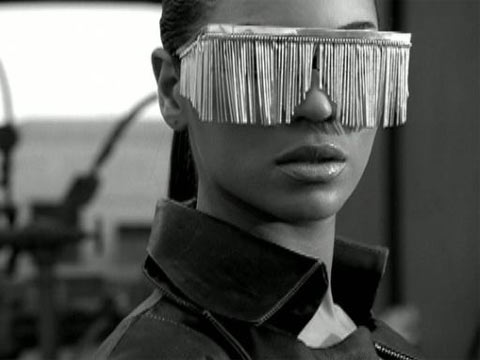
Let me start by saying I completely disagree with Beyoncé in her single “Diva.” In the opening lines of the song, B argues that a diva is “a female version of a hustler.” Not to argue with the owner of the coolest fringe sunglasses I’ve ever seen, but no. A true diva ain’t no hustler, a true diva walks into a room and hell breaks loose – now I know that usually divas are thought of as spitfires, sass masters, and trainwrecks ( a la Miss Winehouse) – but I would argue that setting all that aside, a true diva walks into a room and hell breaks loose because her voice fills the room and takes over. I’m talking a big voice that takes no prisoners, that sits you down, slaps your ‘cross the face and makes you shut up. A voice with personality and warmth, but most of all with intensity and volume (in the physics’ meaning of the word). It helps if the lady with the big voice is a crazy bitch, as my friend has noted here, but not all hot messes are divas or rather, not all hot messes have a diva voice.

Speaking of B leads me to the pop music scene of today, one in which voices are far less important than sounds, rhythms and catchy phrasing, where Nicki Minaj can sing and Katy Perry can sound less and less like herself (and more and more like an android programmed to sing better than Katy Perry). I read a review in Rolling Stone last November of new albums by Mary J. Blige and Alicia Keys that noted how singles on R&B radio these days often sound like they were written by algorithm so that one song bounces right into the next without any vocal variety. I love Alicia Keys but her most recent album The Element of Freedom limits the haughty singer’s range to crisp mid-range ballads that rarely crackle, sticking with her sexy phone voice instead of her ability to crank things up. Mary J, the Queen of Hip-Hop Soul, dabbles in Auto-Tune on her album StrongerWith Each Tear, but ultimately ends with the kind of shiver-inducing soul-meets-R&B joints that make her a treasure. Her song “Color” from the soundtrack to Precious is a classic. Mary J has got that diva voice, and the ability to move between R&B, soul and hip-hop in a way that keeps her fresh and relevant, but even this diva has had to call on rappers and Auto Tune to keep on the charts.

I can think of plenty of diva voices – Patti, Aretha, Whitney, Mariah, Annie Lennox – but these days the radio doesn’t care for voices that big. Mariah’s most recent hits sound like she’s been studying at the Britney Spears school of singing – cooing, giggling and talk singing her way through enjoyable tracks that lack her signature oomph and ability to hold a note for days and take it for a ride around the block. Whitney’s comeback album and tour has revealed cracks in the famous voice – there’ve been too many articles about disappointed fans and her inability to hold the notes on “I Will Always Love You” for me to not feel bad for her. Her talent has always lain in big ballads and dance numbers that didn’t rely on the flat limited voices that these days dot the pop landscape (Ke$ha, sometimes Gaga, LaRoux – all I like, but all are singing in a range roughly as big as my thumb). I love love love “Million Dollar Bill” – a brilliant pop confection with Alicia Keys and Swizz Beatz mixing up something classy and current (and mixing up a baby). Whitney may not be quite where she once was on this song, but I feel like I can hear her smiling on this track and that helps.

VH1’s attempt to resuscitate Divas Live last September was a hot mess that revealed, among other things, the dearth of popular diva voices on the airwaves. Miley Cyrus’s inclusion made me wince in a way similar to watching Taylor Swift eviscerate Stevie Nicks at the Grammys in January. Miley’s voice is mostly husky posturing and any question of her skill as a diva should have been answered by her recent duet with Dolly Parton on “Jolene.” Say what you will about the owner of Dollywood, she’s got pipes and she blows Miley out of the water. The 2009 Divas Live was heavy on American Idols – Jordin Sparks, Kelly Clarkson and Jennifer Hudson. I love all three, but Jordin always seems like she’s playing at being a pop princess as part of a slumber party game, Kelly does mad well but she’s a rock star for the Adult Contemporary set. J Hud’s where the voice is at. I loved the half of her debut album where she wasn’t buried under cheesy music and the hell that is 90’s slow jams. After all the scuttlebutt around her Oscar and her Grammys, her singles after “Spotlight” didn’t seem to catch fire the way they should have – and am I the only one that finds it embarrassing that the video for “If This Isn’t Love” feels the need to make J Hud stationary so she can watch another couple dance while she remains alone?

The Brits on the roster were Adele and Leona Lewis. I love – or lurve – Adele and her intimate folkie pop songs but she’s too private, too personal, too twee for me to consider her a diva. Hers is a fragile voice, laced with yearning and nights spent alone by a fire. Even when she does a bigger rave-up, as here on my favorite track “Tired,” she’s still too close for a diva. She’s not filling the room with the voice, she’s right next to you, she’s right outside the window, she’s at the other end of the phone. God, I love her voice, though.

Which leaves me with Leona, who like J Hud is the product of a reality TV talent show – in the UK – and who scored with “Bleeding Love” – a Ryan Tedder ballad back before everyone had their stab at his strings and beats brand of enjoyable schmaltz (see B’s “Halo” and Kelly’s “Already Gone”). Leona’s actually the lady who inspired me to write this post. I wondered what happened after her debut album and the blitz for her second album Echo which then seemed to vanish in the ether. The album is a knockout though, better in many ways than the first, the 90’s Mariah album that Mimi forgot she made tricked out with some 21st century beats. Leona knows how to be a diva and a dancehall queen and it’s only a pity that she’s not everywhere. I love the whole album but “Outta My Head” is the standout track – Leona may be a bit cold at times but she’s having fun here, she’s yearning and singing her little heart out against a backdrop of synthesizers and when called for she’ll hold those notes until she’s the last sound standing beating back that army of electronic clicks and whistles. She bends the notes, coos, begs and I promise if you listen to this a few times you’ll have trouble getting it outta your head (I had to, right?).

Which brings me to Xtina – good ol’ Christina Aguilera, the youngest person to make Rolling Stone’s list of the 100 greatest voices, the Dirrrty Mouseketeer who didn’t give a second glance until she tried her hand at being a robot on Bionic (I have an academic hard-on for cyborgs in music, it’s complicated). The album she turned out is an overstuffed hot mess with good tracks that fail to cohere into a whole – instead Bionic is packed with attempts to make club music, fun feminist anthems with mocking choruses and chamber ballads. At times on this album Christina buries her vocal chops, squishes them, limits them, as if she took to hear the claims that she oversings and decided that the quickest way to the top of the charts was to sound like an actual robot. Still, there are gems. I’m partial to “Not Myself Tonight” although I know that makes me a minority but in the valley of this album are three amazing ballads penned by Sia Furler – the whacky Aussie whose recent album We Are Born is the perfect blend of Motown-style pipes and danceable grooves. Sia is also, however, a master of the intimate acoustic moment and Christina corrals her formidable voice into songs that prove she can sing. “I Am” is by far the best of these, a track driven by the organic sound of strings and Christina’s rich voice at a little girl hush explaining her foibles to a lover that can see past all of that. It’s lovely to hear Christina without the distractions, without the vocal gymnastics, the dirrrty lyrics or the 21st century synths and PowerTools. She nails it because of that diva voice.

Wanna talk about divas? Start with “I Am” and call me in the morning.

Tuesday, July 20, 2010

Nota Bene on Eminem and Sex

I wrote a post on ye olde Independence Day about Eminem's use of sexual metaphors on his most recent album Recovery. I definitely think it's an interesting move on Em's part to use anal sex as the central way of illustrating his dominance and fear of being "taken," but what I left out was dangerous - I left out the fact that rape is never about sex but it's rather a more disturbing form of exercising power with sex as merely the vessel for violence and trauma. Sometimes theory overcomes real life and I fear I may have fallen too far down the theoretical rabbit hole (or perhaps I was too deep in Em's psyche - and while I'm on the subject someone recently pointed out to me that "he's in your ass, he's all up in your psyche too" may simply be a statement about how hung the rapper is - that doesn't not sound like a fun ride at all).

Does it matter if Rihanna likes the way it hurts?

This post serves as a companion to my post from July 4th on Eminem's newest album.

These days it seems that Rihanna is everywhere – the style pages of your favorite magazine, the top of the charts with her sassy spring hit “Rude Boy” and follow-up videos for singles “Rockstar 101” and “Te Amo,” and most recently singing the hook for Eminem’s new single “Love the Way You Lie.” The track comes off Em’s new album Recovery which is going into its fourth week at the top of the Billboard charts and the collabo with Rihanna is perched at number two in the Billboard 100. But what is the message of “Love the Way You Lie”?

On the chorus RiRi sings:
Just gonna stand there and watch me burn
Well that's alright because I like the way it hurts
Just gonna stand there and hear me cry
Well that's alright because I love the way you lie
I love the way you lie

Em’s raps describe a volatile and toxic relationship where both parties are to blame for the ongoing drama but only Rihanna is singing the chorus about being set on fire and liking it. “Love the Way You Lie” is a hot track – perfectly blending Em’s dead serious nasal raps with RiRi’s cold slightly accented delivery. But it’s also a troubling track given Rihanna’s very public relationship with Chris Brown. When Rihanna broke her silence about the night that the couple missed the Grammys because Brown hit her, she told Diane Sawyer on 20/20 that she left her abusive ex upon realizing how much her fans, especially little girls, were looking to her as their role model and example. How then do we reconcile this with the message given in this song – the message that the woman enjoys the pain of abuse, loves it even? Eminem may be presenting the disturbing nature of women’s denial of their abusive relationships and the ways that love can often blind them to the bruises and emotional scars, but I cannot get past the choice of Rihanna to sing on a track with this message.

The Rihanna of “Love the Way You Lie” is a far cry from the Rihanna that we first saw on 20/20 last fall, a defiant independent woman that on her Rated R album fights back against Brown on song after song. I am not arguing that we need to censor songs but rather that Rihanna and Chris Brown are for many tweens and teens their first public brush with intimate partner violence. Many of us were too young for Ike and Tina’s very public divorce, or even the film version with Angela Bassett. But many of us watched Rihanna’s interview and Brown’s subsequent (and in my opinion lame and self-serving) attempts to apologize. We read the blogs. We watched the YouTube videos. We rolled our eyes or deeply believed in C-Breezy’s sobbing breakdown at the BET Awards a couple weeks ago. And now “Love the Way You Lie” is part of that ongoing conversation. What message does this send to those little girls that look up to Rihanna? The girls that want her hair, her clothes, her superstar life?

When the music video drops in a few weeks, I’ll be interested to see what Em’s concocted to match his disturbing lyrics.

Sunday, July 4, 2010

A Love Letter to Eminem, with regards to Leo Bersani

Please be warned, in reproducing lyrics from an explicit album, I end up using explicit language.

Dear Eminem,

I’m writing to you in a very different vein than your doomed friend Stan, although he thought the two of you “should be together” and I guess I’m writing for the same reason, but different.

Let me explain. I’m not a crazed fan. Honestly. And I’m not writing because I plan to emulate your “politically incorrect vaudeville routine” (Rux 18) wherein you murder your mother, your twice ex-wife, and bring your daughters and ask them to push Kim into the water. Or the other disturbing yarns you’ve spun in the last fifteen years.

But I am attracted to you against my better nature. As a queer man who likes sex with men, as a feminist theorist devoted to anti-misogynist and anti-racist praxis, my desire to find you goes against everything I teach my students and espouse in my writings. Let me be clear, by attracted to you, I mean that I would have sex with you. Often. That I was turned on by your photo shoot in Vibe last year where you posed as a butcher in a white jacket soaked with blood. That even your rhymes and your flow and that nasal voice that drones gets me in ways that don’t make sense.

Then again, whoever said that sexual attraction was logical, rational or morally right? Those who have, I disagree. We fall into lust against our better natures, against all the other ways we describe our stable sense of a self that makes perfect A to B to C causal sense. I bought your most recent album Recovery which dropped a few weeks back and hit number one. It’s dominating the charts, your singles are all over the radio, and I’ve got the album on repeat on my iPod. But why?

You have a song on the album called “Seduction” and you claim to seduce with words, but let’s be real, the song lies. Em, you’ve never been a smooth operator, you’ve been a big talker and you’ve taken without asking. You don’t seduce - you dominate, you attack, you take, you fuck without apology.

In his essay, “Eminem: The New White Negro,” Carl Hancock Rux writes, “Eminem’s eminence rarely attempts to address serious social or political ills, nor is it obsessed with hypercapitalism. . . . He maintains his whiteness with quirky vocal Jerry Lewis-like phrasing and a bright Greek-god bleached-blond buzz cut; and the classic hip-hop realism he was initially influenced by when he first studied the style of Naughty by Nature and Nas has been replaced with his own brand of contemporary Surrealism that abstracts and exaggerates hip-hop lore more so than any of his authentic heroes or contemporaries dare try” (27). Eminem “does not offer us the real, he offers the surreal” (Rux 22). Recovery is a highly personal album about beating drug addiction and choosing a new path. Gone are the gross-out skits and any real sense of fun and we are left with an Em that’s “cold as a cold wind blows” but the surrealism hasn’t left. I like it, don’t get me wrong, Em, and you are still wont to “hog [tied] a ho” so I can see you’re still the man we know and love/loathe.

At one point on the album you order the listener to “Bring me two extension chords, I’m ‘a measure my dick, shit I need 6 inches more,” before summing up, “Fuck my dick’s big, bitch.” In between the long gazes into the abyss and wonderings about roads not taken, nestled behind the samples of Black Sabbath, REM, and Lesley Gore (points for creativity), you really like to sing about penises and anuses. On your first single “Not Afraid” you describe a man who’s “got the urge to pull his dick from the earth and fuck the whole universe.” “I’ll be goddamned if another rapper gets up in my ass,” you say in “Cinderella Man,” while over on “Almost Famous” you’re sticking “my dick in this game like a rapist.” Now I know, there’s a textbook reading here that sex is about power and you need to assert that power over and over again, that’s the rapper’s bravado and you’ve got it in spades. But it’s also about being the one fucking, never the one being fucked – only you can fuck the game, only you can fuck the universe, but no one can ever fuck you.

In his book Homos (a title that echoes your own use of this as an epithet across your career along with its ugly stepbrother faggot which always makes my skin crawl), Leo Bersani writes that “nothing is more threatening to the culturally enforced boundaries between men and women than a man participating in the jouissance of real or fantasmatic female sexuality” (121-122). Specifically, Bersani is talking about the shame and discomfort surrounding men being penetrated by other men in anal sex. The experience of being the penetrated or fucked party, and thus presumably the docile and submissive party that just lays there in a fantasy of heterosexual domesticity outmoded yet still circulating, is linked to “female sexuality” and the jouissance or ecstasy to be found there.

Further, Bersani writes in his essay “Is the Rectum a Grave?” about the passive position in anal sex as being one that teems with destructive potential. Sex, according to Bersani, is a self-shattering experience. He writes, “It is the self that swells with excitement at the idea of being on top, the self that makes of the inevitable play of thrusts and relinquishments in sex an argument for the natural authority of one sex over the other” (324). Bersani’s argues that the sex act is caught up in the tension between wanting to assert one’s self as master in the physical moment and ceding power and thus abolishing self through the act. There is subversion in even allowing women to be on top in normal missionary sex; consider the frisson for example that is found in Usher’s song and video “Trading Places.” Add to that the shattering of self possible in truly letting go in the moment of orgasm, in truly not being present.

I suspect that the fear of this runs rampant in Recovery and across your career, Mr. Mathers. In my favorite track from the new album, “Cinderella Man,” you ask the listener to guess who the returning champion is, describing that, “he came to the ball in his wife beater, lost his Nike shoe,” before explaining that, “He’s in your ass, he’s in your ass, he’s all up in your psyche too.” It’s as if you’ve read Bersani, the way that being inside the listener’s ass means you’re inside the listener’s psyche, the way that being in control of the sexual situation, topping, means that you are even more yourself and take control of the bottom’s psyche/self. You are larger than life (this isn’t a penis joke) with that surreal edge that means you aren’t merely a great lay for the ladies but you’re able to infect them through their asses. Of course, you need not be up in the asses of ladies in this song since it’s all metaphorical and thus it could be my ass or another man’s, just as long as it isn’t yours.

I’m not calling you gay now, Em. I know you’ve had a checkered past with the LGBT community, with charges of defamation from GLADD that you responded to with your memorable Grammy performance with Sir. Elton John. More recently as the “new tolerant” Eminem you told the New York Times Magazine that gay people should be able to marry because, “I think that everyone should have the chance to be equally miserable, if they want.” I am calling you a top or maybe just wondering how many times you can mention your cock and balls and other people’s asses without people wondering. I know it’s not a new attack, but I propose a different spin, or maybe I’m just practicing some wish fulfillment with the aid of theory. Maybe I want you all up in my psyche.

Maybe I’m most confused by this string of rhymes from Recovery’s opening track: “Motherfucker might as well let my lips pucker / Like Elton John, cause I'm just a mean cock sucker / let the world on fire, piss on it, put it out . . . Who the fuck is you pushin', you must have mistook me for some sissy / Soft punk looking for some nookie or bosom / Go ahead, fucking hater push me / I told you ain't no fucking way to shush me / Call me a faggot cause I hate a pussy / Man the fuck up sissy, G's up.” Rap’s hard to understand already when it comes to rapid-fire flow but add in ventriloquizing others and it’s a complicated game. Perhaps you are someone else when you call yourself a “mean cocksucker,” but it seems rather like the tactic here is one of a masculinity hat trick, admit you and Elton John share a predilection for oral sex with men, challenge others to call you gay/queer/faggot and then turn around and sic that same epithet at these haters. The impression is that you’re too much of a man to be concerned with this, that you’re innate masculinity overcomes your admission of rad oral sex skills. You call yourself a “sick pig” elsewhere on the album and even force a listener to sip urine through a straw but I wonder if your sick pig is my queer conundrum. I wonder if you realize some gay men call themselves pigs because they are willing to be submissive receptacles for the bodily fluids of other men.

But you’re too violent for me to buy you as a total bottom/sub. On “Space Bound,” you wax about a brilliant love affair and then in great detail describe murdering the woman with tears streaming down your cheeks. It’s a change from “’97 Bonnie & Clyde” (covered here eerily by Tori Amos [please ignore the bootleg vid]) when you brought along your daughter to dump the body in the lake, but you are still asserting your masculinity through surreal fantasies of murder. Far and away more troubling is “Love the Way You Lie,” in which you and Rihanna sing about a violent and toxic relationship. In the chorus, Rihanna, the Barbadian pop diva, sings “Just gonna stand there / And watch me burn / But that's alright / Because I like / The way it hurts.” The very public nature of Rihanna’s partner abuse case with ex-boyfriend Chris Brown adds a further valence of unease in this song since she’s singing about complicity with domestic violence and finding pleasure in the pain. You rap that you love her, but in the same breath vow that “If she ever tries to fucking leave again, I’m ‘a tie her to the bed and set the house on fire.”

Maybe I’m drawn to all of these inconsistencies, to your sureness, to your fascination with sexual power and your assumption that your public self will overcome any possible doubts the public has about your sexuality. I cannot condone your violence, your misogyny, your hatred of women, your coldness toward compassion, your positioning of yourself as the great white hope.

Maybe my sexual attraction comes from your own obsession with your sexual equipment, the way that your surreal erotic life is improbable and that you always maintain your position on top. But if you are so broken and bruised after your tumble with drug addiction maybe release comes from letting go of who Eminem has always been and no longer trying to get into the world’s psyche. Maybe you need the jouissance of the bottom.

Maybe.

For now I’m hitting repeat on “Cinderella Man.”

Still confused,
Me

Sunday, June 27, 2010

Color Contrast, White as the New Abject, and Jay-Z

“It’s about color contrast, it’s not about slavery or anything,” one of my students said. We were discussing Lady Gaga’s “Paparazzi” music video, specifically the scene in which the handicapped Gaga returns to her mansion and her car is attended by black men in suits that move with a fluidity of motion that indexes the voguing of the Harlem ball scene. I love my students this quarter and I think the point made here is valid but misses the politics of that “color contrast” observed. In the scene from “Paparazzi” the color contrast achieved leaves Gaga as a pure white blonde object carried and attended to by black men. There is nothing accidental about this color contrast carrying with it the attendant racial contrast which stems from an existing racial structure. This is the point where you, reader, like my students, might be thinking I overanalyze and the point where I say, well, yes, not everyone who watches Gaga on YouTube or television or at the video bar appreciates the political nature of this thirty second scene. But that doesn’t mean it doesn’t inform their viewing experience, that it doesn’t inform how they understand Gaga’s power within the music video, one that echoes Madonna’s similar moves to position herself as (lily white) dictator of the entire narrative.

Color isn’t accidental in an American context where we have learned about black and white since kindergarten, often at the expense of a nuanced understanding of the diversity of racial experience. Still, as Toni Morrison argues persuasively in her book of essays Playing in the Dark, the white/black binary is pervasive in our historical imaginary (Morrison’s focus is on canonical literature but her observations easily translate to the realm of the visual). The recent trend in music videos to film in black and white often serves to highlight and accentuate the ways in which race plays out as a tool of commerce.

Beyoncé’s dual personality project I Am . . . Sasha Fierce has birthed several black and white videos for her ballads. In “If I Were a Boy,” - B’s sappy rehash of Ciara’s “Like a Boy” (also in b&w) - the perverse nature of the singer’s betrayal is accented by racial politics absent from the song itself. B cheats on her black boyfriend with a white man. The boyfriend is further endarkened by his consistent placement in deep shadows (he is in the blurred foreground in the picture to the left watching B and the white man) and shots of him driving at night contrasted with the extreme whiteness of Beyonce’s police partner – the white man she is cheating with. Having the other man be both white and a cop further highlights his position as part of the dominant power structure. Gaga’s recent video for “Alejandro” is either a statement about the interpenetration of homoeroticism, the Catholic Church and the military or an excuse for the singer to deep-throat a rosary and make attractive men dance in high heels, Spanx and bowl cuts. Black and white film lends an air of verisimilitude and realness to any music video, and Gaga clearly plays on the ways in which using black and white film and supersaturated sepia (with the intentional splashes of red a la Schindler’s List – change out a human heart for a girl’s dress) evokes old Hollywood. The use of a monochromatic palette also reveals the Aryan nature of Gaga’s vision in “Alejandro.” A “Latin-themed” song about sex with men named Alejandro, Roberto and Fernando births an eight minute epic that visually disavows the presence of the Hispanic/Latino male in the song replacing him with a sea of classically European men in some sort of pseudo- Stalinist state.

Toni Morrison describes the “blinding whiteness” that functions as “both antidote for and meditation on this whiteness – a dark and abiding presence that moves the hearts and texts of American literature with fear and longing” (32-33). This blinding whiteness is made visual in music video texts like “Alejandro” and perhaps most vividly in Kanye West’s video “Love Lockdown” which places the outspoken rapper in an all white apartment that mirrors the coldness of his despair. The unease provoked by the shadowy presence of blackness can be seen in the hurt face of B’s boyfriend in “If I Were a Boy,” relegated to the video’s margins and in the ways that Rihanna’s body becomes animalistic when covered in black body paint in the b&w video for “Rockstar 101.” Suddenly the light-skinned Barbadian becomes darker and more the Other (and the whole video screams for comparison with Grace Jones).

These spectacular uses of blackness remind me of Julia Kristeva’s frequently quoted concept of the abject, “the jettisoned object” which is “radically excluded” drawing us toward “the place where meaning collapses” (2 in Powers of horror). The abject is that thing which makes us ill to look at, that thing which is a part of ourselves we would rather cast aside than acknowledge. Kristeva cites corpses, bodily fluids and the skin on turned milk as instances of that thing which was a part of our self and yet it turns our stomach and so we keep it out of sight. Much as we try to ignore or disavow the abject it sits in our peripheral vision and, like Peter Pan’s shadow, refuses to stay in its appropriate place.

For the music video for his track “On To The Next One,” rap superstar Jay-Z presents a vision of conspicuous consumption that understands the nuances of high society. As others have noted the black and white video draws extensively from the work of modern art in presenting seemingly unrelated images that include expensive cars, flaming basketballs and a ghastly skull. Jay-Z and Swizz Beatz rap directly to the camera in a straightforward delivery and all of the other images used in the montage are similarly framed in a style reminiscent of pieces in a museum or gallery. The video is a haunting one and I can see why its imagery has only added fuel to those conspiracy theorists that argue Jay-Z and other successful musical artists are members of the Illuminati, giving their souls to Satan in exchange for success. This is a video celebrating Jay-Z’s arrival as the premiere rap artist of a generation, a 40 year old CEO with eleven number one albums under his belt and the perfect partner in Beyoncé. Racial politics are also written into the video with the rapper’s mention of his alignment with Barack Obama (“Obama on the text”) and his referencing of the racist practices of Cristal champagne (“I used to drink Cristal / them fuckers racist”).

I keep returning to this video not because of the catchy chorus and able rhymes but because of the haunting images and the evocative use of the black and white aesthetic. While there are images of blackness as an eerie presence, the overwhelming feeling from the video is that the abject and haunting figures are aligned with the “blinding whiteness.” Specifically, I am struck by the figures of the pale-faced topless male drummer, the white face of man wearing a black hood and black lipstick, and a suited figure dressed like the Joker of the Batman movies and comics. The flat affect of these figures with their cold stares stand in stark contrast to the boasts of Jay and Swizz Beatz and also the imploring look of a young black girl in a basketball jersey. When you add in the oscillating white backgrounds and the dripping white liquids that slide down black brick walls and puddle like milk, whiteness in “On To the Next One” suggests an abjected space, a place of unease and dis-ease.

I used the adjective haunting which seems especially apt given the use of the Joke figure which evokes Heath Ledger’s Joker from The Dark Knight even if the two are not exact doppelgangers. Ledger’s Oscar-winning performance was itself a celluloid haunting coming to our movie theaters after his tragic death, the extra-textual knowledge adding layers to an already nuanced portrait of a man with either no past or multiple pasts. In Ghostly Matters, Avery Gordon writes that examining haunting requires attention to “what appears to be in the past, but is nonetheless powerfully present” (42), and the Joker operates this way both in The Dark Knight and in “On To the Next One.” The experience of being haunted, according to Gordon, “troubles or even ruins our ability to distinguish reality and fiction, magic and science, savage and civilized, self and other, and in those ways gives to reality a different color” (emphasis in original 53). In a song where the chorus is really just the chant “on to the next one“ stressing the need to stay ahead, the video’s use of haunting figures troubles easy distinctions between past and present, between a racist company’s past and their present, between a dead movie star and his avatar in a current video, between the swirling ink of a Rorschach test and the disavowal of potentially outmoded psychiatric method. Racist pasts loom large in music videos when the color contrast comes to the fore and is used for aesthetic, commercial and submerged political purposes. “On to the Next One” switches up the binary described by Morrison, shifts the haunting and abject to the white bodies and leaves the bodies of color in control, leaving them to speak as the narrators of the rapped truth. Women’s bodies remain presented as spectacle, yet both the white female figure and the woman of color dancing are presented as not static but moving art pieces along with all the other bodies shown here.

I just keep coming back to those unearthly, deathly white faces staring out at me without any feeling and am repelled by their presence and fascinated at the same time. This is the abject looking at us from within the black frames offered by “On to the Next One,” for once the figures of color rule the roost and blinding whiteness unsettles, discomfits, turns my stomach. The color contrast speaks a potential for new racial politics of the visual, a potential constantly eroded though by the push of the economic machine and the need to reify an existing black/white binary that makes hegemonic common sense.